Loading...
Loading...
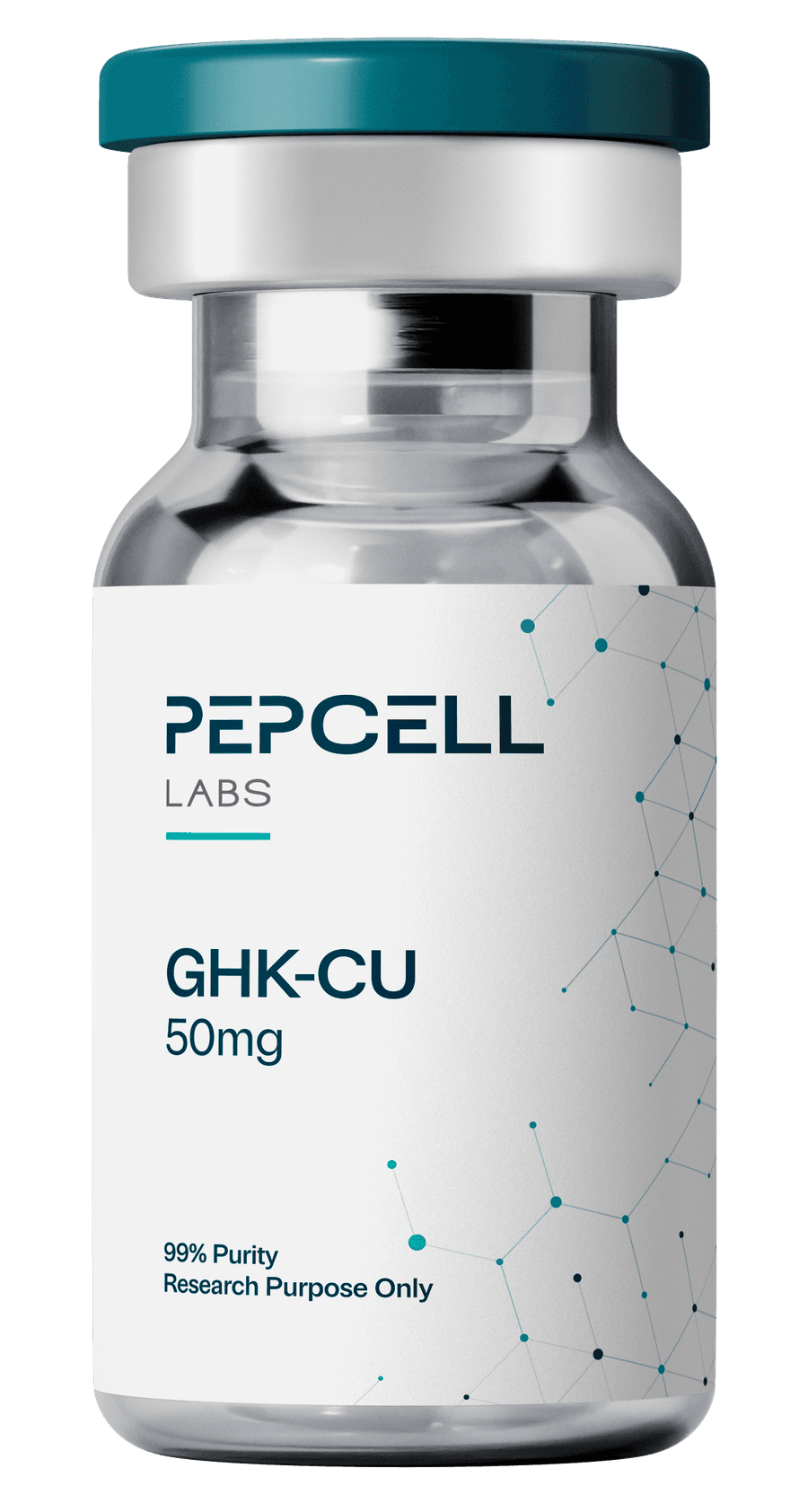
Size: 50mg
Dermal Compound
In stock · Ships same day · Free shipping over $150
Technical specifications
Molecular Profile
Copper-binding tripeptide complex of glycyl-L-histidyl-L-lysine.
Storage Requirements
Lyophilized (powder)
-20°C · stable long-term
Reconstituted / in solution
2-8°C · use within 30 days
GHK-Cu (glycyl-L-histidyl-L-lysine copper complex) is a naturally occurring tripeptide with a high affinity for copper(II) ions, first isolated from human plasma in 1973 by Dr. Loren Pickart. Present at approximately 200 ng/mL in young plasma, GHK-Cu levels decline significantly with age, dropping to roughly 80 ng/mL by age 60. At the molecular level, GHK-Cu modulates gene expression across multiple pathways, with microarray studies demonstrating that it influences the activity of over 4,000 human genes, notably upregulating collagen I, collagen III, elastin, decorin, and several glycosaminoglycans critical for extracellular matrix integrity. Published peer-reviewed research indicates that GHK-Cu activates wound healing through stimulation of dermal fibroblast proliferation, promotion of angiogenesis via VEGF and FGF-2 upregulation, and recruitment of mesenchymal stem cells to injury sites. Its antioxidant profile includes potent superoxide dismutase (SOD)-like activity and suppression of iron-catalyzed lipid peroxidation and free radical damage. What distinguishes GHK-Cu from other regenerative peptides is its dual role as both a remodeling signal and an anti-inflammatory modulator — it simultaneously promotes new tissue formation while downregulating genes associated with fibrinogen synthesis and acute inflammatory responses, including TGF-beta and TNF-alpha pathways. Current scientific investigation continues in areas of dermal rejuvenation, hair follicle cycling, chronic wound repair, and COPD-related lung tissue remodeling, with multiple in-vivo and in-vitro studies published across independent laboratories worldwide.
Published research demonstrates that GHK-Cu upregulates collagen type I and type III synthesis in dermal fibroblasts by activating TGF-beta signaling and increasing decorin expression, which organizes collagen fibril assembly. Microarray studies show simultaneous increases in elastin and glycosaminoglycan production, restoring the extracellular matrix architecture that degrades with chronological and photoaging.
GHK-Cu activates multiple convergent wound repair pathways, including fibroblast and keratinocyte migration, angiogenesis through VEGF and FGF-2 upregulation, and nerve outgrowth at injury margins. Preclinical wound models report significantly accelerated closure rates, increased granulation tissue formation, and reduced hypertrophic scarring compared to untreated controls, with proposed mechanisms involving mesenchymal stem cell recruitment to injury sites.
GHK-Cu exhibits potent superoxide dismutase (SOD)-like enzymatic activity, directly catalyzing the dismutation of superoxide radicals. Additionally, it suppresses iron-catalyzed lipid peroxidation and inhibits reactive carbonyl species formation, protecting cell membranes and mitochondrial function from oxidative stress. Published literature suggests it also upregulates endogenous antioxidant enzyme gene expression, amplifying cellular defense capacity beyond its direct radical-scavenging activity.
Published research protocols reference subcutaneous and topical administration routes. Store refrigerated at 2-8°C.
Every batch is independently analyzed by a third-party laboratory for purity and identity before release. A batch-specific Certificate of Analysis (COA) is available for each lot.
Purity
99.9%
Lab
Janoshik Analytical Laboratory
Batch
GHKCU-2025-001
Test Date
2025-01-25
Orders placed before our daily cutoff ship the same business day. Free shipping on orders over $150, with tracking emailed as soon as your order leaves our facility.
Shipment protection covers your order against loss or damage in transit — if a protected order is lost or arrives damaged, our support team will arrange a replacement or resolution.
For in-vitro research and laboratory use only. This product is not a drug, supplement, food, or cosmetic, and has not been evaluated by the FDA.
Use is restricted to qualified researchers and laboratories operating within all applicable institutional, legal, and ethical guidelines. By purchasing, you confirm you are acquiring this product solely for lawful research purposes.
GHK-Cu in lyophilized form should be stored at -20°C, where it remains stable for up to 24 months. The copper ion complex is relatively robust, but exposure to moisture can cause premature degradation. Once reconstituted with bacteriostatic water, store at 2-8°C protected from light and use within 30 days. Note that GHK-Cu solutions may develop a faint blue-green tint from the copper complex — this is normal and indicates intact copper coordination.
Our GHK-Cu is verified at 99%+ purity through independent HPLC analysis at Janoshik Analytical Laboratory. Each batch undergoes additional mass spectrometry testing to confirm the molecular identity of the copper-peptide complex (MW 403.93 Da), along with elemental copper content analysis to verify proper metal coordination stoichiometry. Certificates of Analysis are available for every batch.
GHK-Cu vial quantities are formulated based on dosage ranges cited in published peer-reviewed research, typically 1-2mg daily for subcutaneous protocols. The 50mg vial supports lower-dose research designs, while the 100mg vial accommodates higher-dose or extended protocols referenced in the dermal regeneration and wound healing literature.
Currently we ship to all 50 US states. Standard shipping is free on orders over $150 ($9.99 for orders under $150), and express shipping (1-2 business days) is available for $14.99. GHK-Cu ships as a stable lyophilized powder and tolerates standard shipping conditions well. International shipping is coming soon.
GHK-Cu is sold strictly for in-vitro research, laboratory use, and educational purposes. While GHK-Cu is a naturally occurring human plasma peptide with a substantial body of published research including clinical dermatological studies, this product is not intended for human consumption or self-administration. Always consult applicable regulations in your jurisdiction.