Loading...
Loading...
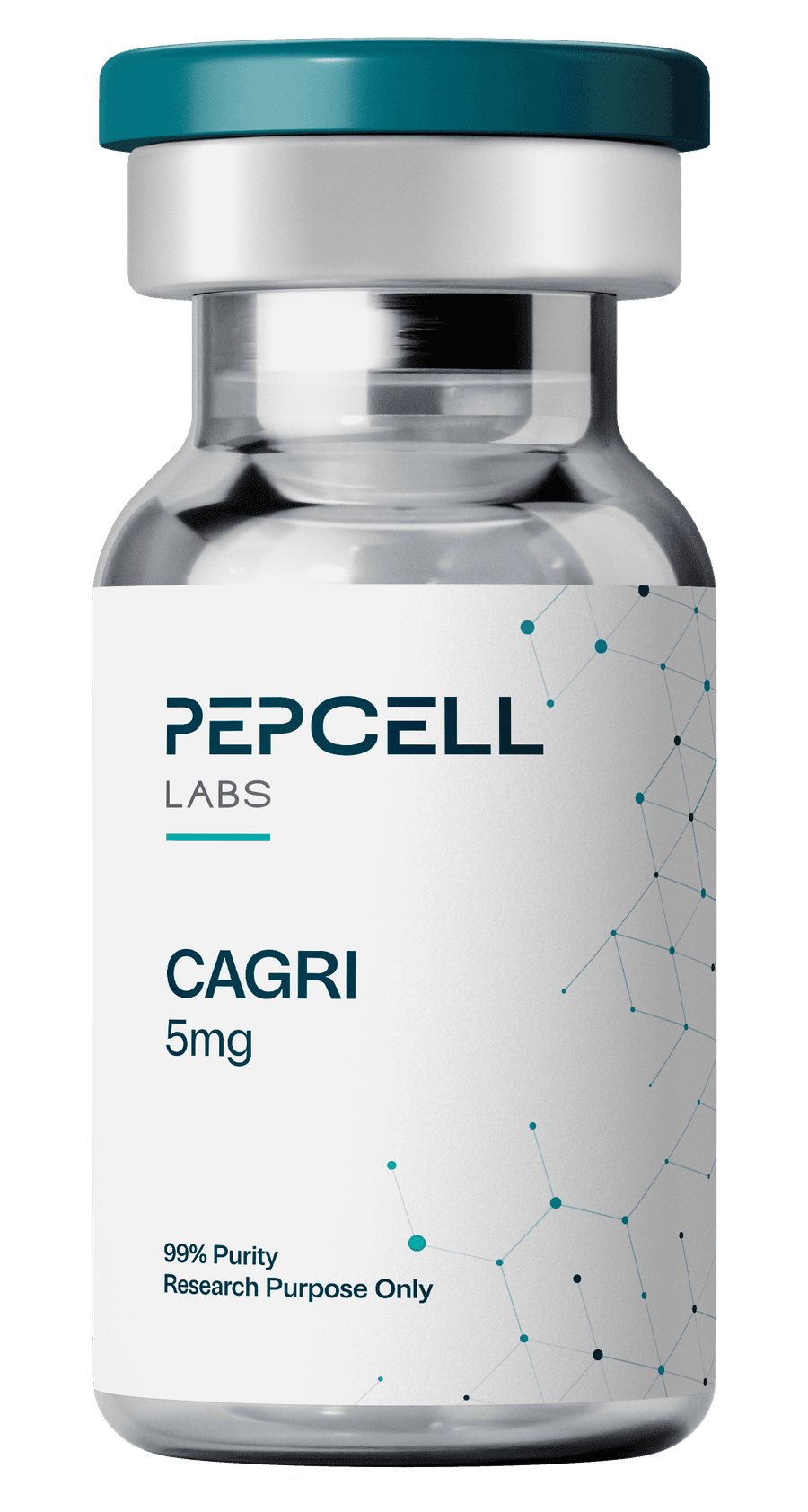
Size: 5mg
Metabolic Research Peptide
In stock · Ships same day · Free shipping over $150
Technical specifications
Molecular Profile
Long-acting acylated amylin analog (37 amino acids).
Storage Requirements
Lyophilized (powder)
-20°C · stable long-term
Reconstituted / in solution
2-8°C · use within 30 days
Cagrilintide is a long-acting acylated amylin analog engineered with a C18 fatty diacid modification that enables albumin binding and extends its pharmacokinetic half-life to support once-weekly dosing protocols. Structurally derived from the 37-amino acid hormone amylin (islet amyloid polypeptide), which is co-secreted with insulin by pancreatic beta cells after meals, cagrilintide activates amylin receptors (AMY1 and AMY3) in the area postrema and hypothalamic nuclei to promote satiety, slow gastric emptying, and suppress postprandial glucagon secretion. Phase 2 clinical research published in The Lancet demonstrated dose-dependent body weight reductions of up to 10.8% over 26 weeks as a monotherapy, with even greater reductions observed when investigated in combination with semaglutide (the CagriSema combination). What distinguishes cagrilintide from GLP-1-based compounds is its activation of a complementary and non-overlapping satiety pathway — the amylin system — which may explain the additive efficacy observed in dual-pathway research. Ongoing Phase 3 trials are investigating cagrilintide both as a standalone agent and in fixed-ratio combination with semaglutide. This is a research-grade compound for laboratory investigation, not an FDA-approved product.
Selectively activates AMY1 and AMY3 amylin receptors in the area postrema and hypothalamus, engaging a satiety pathway that is mechanistically distinct from GLP-1 receptor signaling. This non-overlapping mechanism is the basis for investigating additive effects when combined with incretin-based compounds.
Slows gastric emptying through vagal afferent signaling and brainstem activation, prolonging nutrient contact with the intestinal wall and extending postprandial satiety. Published Phase 2 data showed dose-dependent reductions in food intake correlating with delayed gastric transit times.
Phase 2 clinical research demonstrated up to 10.8% body weight reduction over 26 weeks as monotherapy, with significantly greater reductions observed in combination protocols with GLP-1 receptor agonists. Cagrilintide's caloric reduction appears driven by central nervous system satiety signaling rather than nausea-mediated appetite loss.
Published research protocols reference weekly subcutaneous administration. Store refrigerated at 2-8°C.
Every batch is independently analyzed by a third-party laboratory for purity and identity before release. A batch-specific Certificate of Analysis (COA) is available for each lot.
Purity
99.3%
Lab
Janoshik Analytical Laboratory
Batch
CAGRIL-2025-001
Test Date
2025-03-27
Orders placed before our daily cutoff ship the same business day. Free shipping on orders over $150, with tracking emailed as soon as your order leaves our facility.
Shipment protection covers your order against loss or damage in transit — if a protected order is lost or arrives damaged, our support team will arrange a replacement or resolution.
For in-vitro research and laboratory use only. This product is not a drug, supplement, food, or cosmetic, and has not been evaluated by the FDA.
Use is restricted to qualified researchers and laboratories operating within all applicable institutional, legal, and ethical guidelines. By purchasing, you confirm you are acquiring this product solely for lawful research purposes.
Cagrilintide activates the amylin receptor system (AMY1/AMY3) rather than the GLP-1 receptor. Amylin is a separate satiety hormone co-secreted with insulin from pancreatic beta cells. Because these are non-overlapping pathways, cagrilintide is being investigated in combination with GLP-1 agonists like semaglutide for potentially additive effects on appetite suppression and body weight.
Reconstitute the lyophilized cagrilintide with bacteriostatic water, injecting slowly along the vial wall. The acylated peptide structure dissolves readily. Do not shake. Once reconstituted, store at 2-8°C. The C18 fatty diacid modification provides enhanced stability compared to native amylin.
CagriSema is an investigational fixed-ratio combination of cagrilintide and semaglutide currently in Phase 3 clinical trials. This Pepcell product contains cagrilintide as a standalone research compound. Researchers studying dual-pathway approaches may pair it with separate GLP-1 compounds in their protocols.
Every cagrilintide batch is third-party tested at Janoshik Analytical Laboratory via HPLC purity analysis and mass spectrometry identity confirmation. Current batches test at 99.3% purity with full Certificates of Analysis provided for each lot number.
Cagrilintide is sold exclusively for in-vitro research and laboratory investigation. It is not an FDA-approved drug product and is not intended for human consumption or self-administration. Consult published clinical literature and applicable regulations before designing any research protocol.