Loading...
Loading...
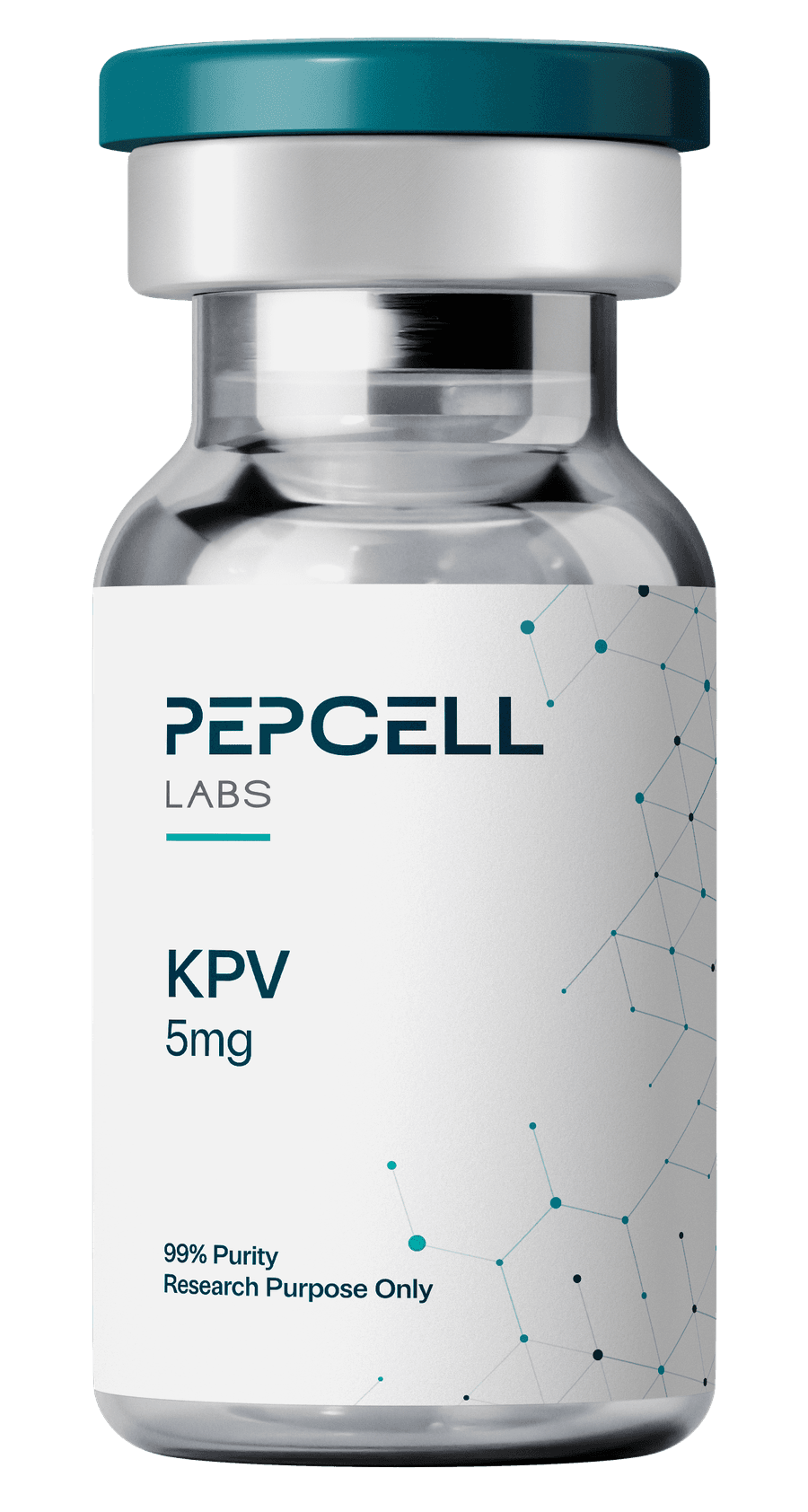
Size: 5mg
Cellular Peptide
In stock · Ships same day · Free shipping over $150
Technical specifications
Molecular Profile
C-terminal tripeptide fragment of α-MSH (Lys-Pro-Val).
Storage Requirements
Lyophilized (powder)
-20°C · stable long-term
Reconstituted / in solution
2-8°C · use within 30 days
KPV is a C-terminal tripeptide (Lys-Pro-Val) derived from the 13-amino acid alpha-melanocyte-stimulating hormone (alpha-MSH), retaining the parent hormone's potent anti-inflammatory activity despite lacking its melanocortin receptor binding affinity. KPV exerts its effects primarily through direct inhibition of the NF-kB (nuclear factor kappa-light-chain-enhancer of activated B cells) inflammatory signaling cascade, specifically by preventing IkB-alpha phosphorylation and subsequent nuclear translocation of NF-kB p65 subunits. Published research in murine colitis models demonstrated that orally administered KPV significantly reduced intestinal inflammation, decreased pro-inflammatory cytokine levels (TNF-alpha, IL-6, IL-1beta), and improved histological colitis scores, with the peptide being absorbed by colonic epithelial cells through the PepT1 transporter. In dermatological research, KPV has been shown to suppress inflammatory responses in keratinocytes and reduce cutaneous inflammation through melanocortin-independent pathways. What makes KPV unique among anti-inflammatory peptides is its small size (just three amino acids), oral bioactivity in gut tissue, and targeted NF-kB inhibition without broad immunosuppression. Current research explores applications in inflammatory bowel conditions, atopic dermatitis, and systemic inflammatory states.
Directly prevents IkB-alpha phosphorylation and nuclear translocation of NF-kB p65 subunits, suppressing transcription of pro-inflammatory genes including TNF-alpha, IL-6, IL-1beta, and COX-2. This targeted inhibition of the master inflammatory cascade occurs without broad immunosuppressive effects observed with corticosteroids or calcineurin inhibitors.
Orally administered KPV is absorbed by colonic epithelial cells through the PepT1 peptide transporter and exerts local anti-inflammatory effects within the gut mucosa. Published murine colitis research demonstrated significant reductions in histological inflammation scores, decreased neutrophil infiltration, and lower colonic pro-inflammatory cytokine concentrations.
Suppresses inflammatory responses in keratinocytes and reduces cutaneous inflammation through NF-kB-dependent pathways that are independent of classical melanocortin receptor signaling. In vitro research on human skin cells demonstrated reduced IL-8 and TNF-alpha secretion, suggesting potential relevance for inflammatory skin condition research.
Published research protocols reference subcutaneous and oral administration routes. Store refrigerated at 2-8°C.
Every batch is independently analyzed by a third-party laboratory for purity and identity before release. A batch-specific Certificate of Analysis (COA) is available for each lot.
Purity
99.4%
Lab
Janoshik Analytical Laboratory
Batch
KPV-2025-001
Test Date
2025-02-13
Orders placed before our daily cutoff ship the same business day. Free shipping on orders over $150, with tracking emailed as soon as your order leaves our facility.
Shipment protection covers your order against loss or damage in transit — if a protected order is lost or arrives damaged, our support team will arrange a replacement or resolution.
For in-vitro research and laboratory use only. This product is not a drug, supplement, food, or cosmetic, and has not been evaluated by the FDA.
Use is restricted to qualified researchers and laboratories operating within all applicable institutional, legal, and ethical guidelines. By purchasing, you confirm you are acquiring this product solely for lawful research purposes.
KPV (Lys-Pro-Val) is the C-terminal tripeptide fragment of the 13-amino acid alpha-melanocyte-stimulating hormone. It retains the anti-inflammatory activity of the parent hormone through NF-kB inhibition but lacks melanocortin receptor binding, meaning it does not cause skin pigmentation changes. This makes KPV a more targeted anti-inflammatory research tool than full-length alpha-MSH.
Yes. Published research demonstrated that KPV is absorbed by colonic epithelial cells through the PepT1 peptide transporter, allowing orally administered KPV to exert local anti-inflammatory effects directly within the intestinal mucosa. This oral bioactivity in gut tissue is unusual for peptides and is a key research advantage of KPV over larger anti-inflammatory molecules.
Reconstitute lyophilized KPV with bacteriostatic water by slowly injecting along the vial wall. As a very small tripeptide (only 3 amino acids), KPV dissolves rapidly and has good stability in solution. Store unreconstituted peptide at -20°C; after reconstitution, refrigerate at 2-8°C and use within 30 days.
Each KPV batch undergoes independent HPLC purity analysis and mass spectrometry identity verification at Janoshik Analytical Laboratory. Current batches test at 99.4% purity, and batch-specific Certificates of Analysis are available for every lot number.
KPV is sold exclusively for in-vitro research, laboratory investigation, and educational purposes. It is not an FDA-approved drug and is not intended for human consumption or self-administration. Research protocols should reference published literature for dosing and administration methodologies.