Loading...
Loading...
Size: 5mg
Cognitive & Neuroprotective Peptide
In stock · Ships same day · Free shipping over $150
Technical specifications
Molecular Profile
Synthetic heptapeptide analog of ACTH(4–10).
Storage Requirements
Lyophilized (powder)
-20°C · stable long-term
Reconstituted / in solution
2-8°C · use within 30 days
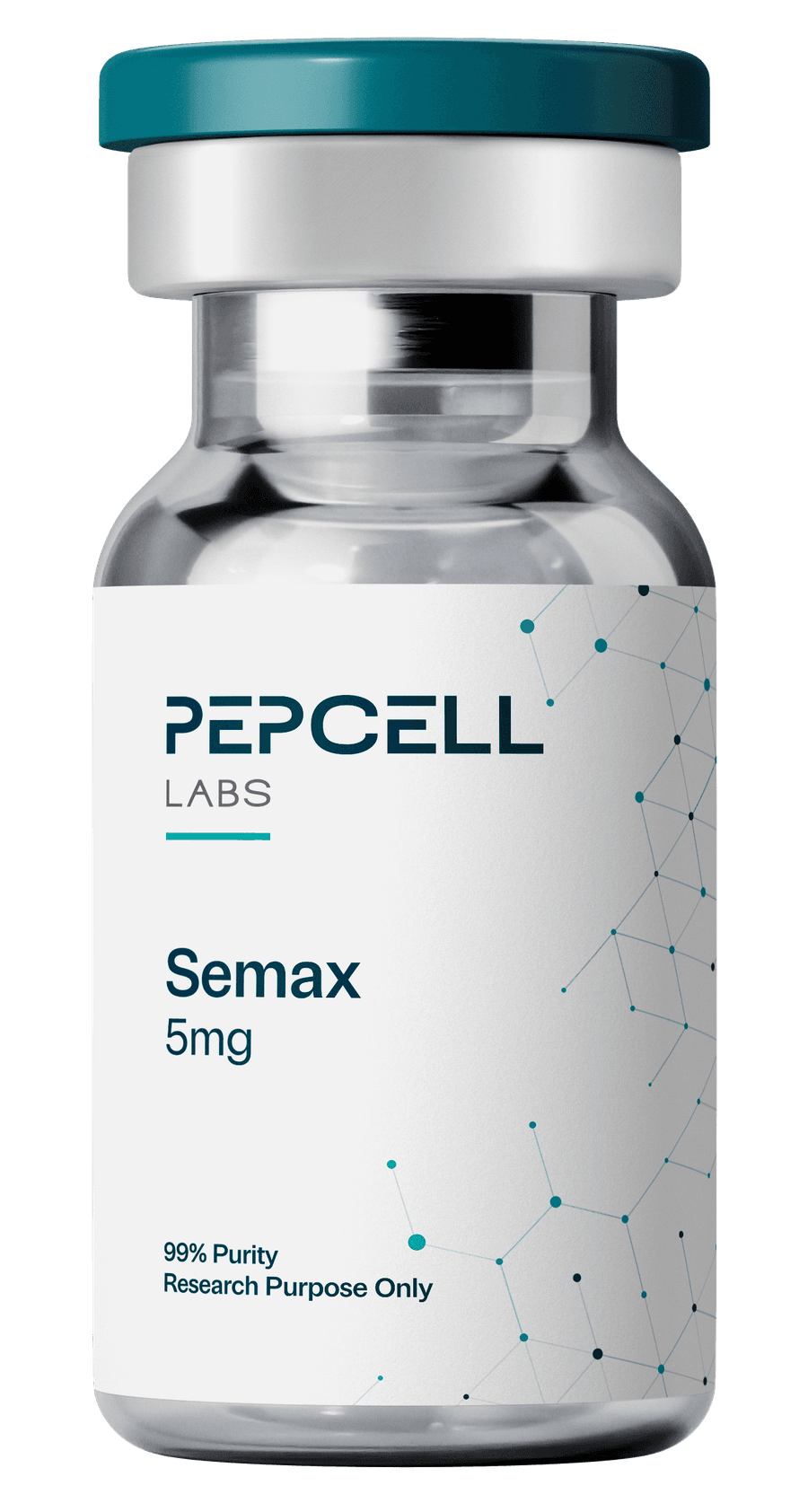
Semax (Met-Glu-His-Phe-Pro-Gly-Pro) is a synthetic heptapeptide analog of the adrenocorticotropic hormone fragment ACTH(4-10), developed at the Institute of Molecular Genetics of the Russian Academy of Sciences with the addition of a Pro-Gly-Pro C-terminal tripeptide that confers enhanced metabolic stability and extended biological half-life through resistance to aminopeptidase and carboxypeptidase degradation. At the molecular level, published peer-reviewed research demonstrates that Semax produces a remarkably potent upregulation of brain-derived neurotrophic factor (BDNF) expression — studies report up to 800% increases in BDNF mRNA in the hippocampus and frontal cortex — along with significant increases in NGF and TrkB receptor expression that drive neuroplasticity, dendritic branching, and long-term potentiation at glutamatergic synapses. Semax modulates multiple monoamine neurotransmitter systems, enhancing dopaminergic and serotonergic tone in the prefrontal cortex to improve attention, working memory, information processing speed, and executive function, while its melanocortin receptor activity engages anti-inflammatory and neuroprotective MC4R signaling pathways. What distinguishes Semax from other nootropic compounds is the magnitude and specificity of its BDNF upregulation combined with its established clinical history — Semax has been approved as a registered medication in Russia for treatment of cognitive disorders, stroke recovery, and optic nerve atrophy, with over two decades of clinical use and pharmacovigilance data. Gene expression profiling studies have identified over 1,800 genes differentially regulated by Semax in brain tissue, spanning immune response, vascular function, and neuroplasticity pathways. Current scientific investigation continues in attention deficit models, neurodegenerative disease, post-stroke cognitive rehabilitation, and the molecular mechanisms of BDNF-dependent neuroplasticity.
Published research demonstrates that Semax produces up to 800% increases in BDNF mRNA expression in the hippocampus and frontal cortex, along with significant upregulation of TrkB receptor density. This magnitude of neurotrophic factor induction drives robust enhancement of long-term potentiation at glutamatergic synapses, increased dendritic spine density, and accelerated neurogenesis in the subgranular zone of the hippocampal dentate gyrus — the structural substrates of learning, memory formation, and cognitive flexibility.
Semax enhances dopaminergic and serotonergic neurotransmission in the prefrontal cortex, the brain region responsible for executive function, sustained attention, and working memory. Published clinical and preclinical studies report improvements in attention span, information processing speed, verbal fluency, and working memory capacity. Gene expression profiling reveals that Semax modulates over 1,800 genes in brain tissue, including clusters involved in synaptic transmission, ion channel regulation, and neuronal signaling efficiency.
Semax activates melanocortin receptor (MC4R)-dependent anti-inflammatory signaling cascades that reduce microglial activation and pro-inflammatory cytokine release following neuronal injury. Published research in ischemic stroke models demonstrates reduced infarct volume, preserved blood-brain barrier integrity, and attenuated excitotoxic glutamate-mediated neuronal death. The combination of neurotrophic and anti-inflammatory mechanisms provides multi-layered neuroprotection distinct from single-pathway antioxidant approaches.
Published research protocols reference intranasal administration 2-3 times daily. Store refrigerated at 2-8°C.
Every batch is independently analyzed by a third-party laboratory for purity and identity before release. A batch-specific Certificate of Analysis (COA) is available for each lot.
Purity
99.8%
Lab
Janoshik Analytical Laboratory
Batch
SEMAX-2025-001
Test Date
2025-02-06
Orders placed before our daily cutoff ship the same business day. Free shipping on orders over $150, with tracking emailed as soon as your order leaves our facility.
Shipment protection covers your order against loss or damage in transit — if a protected order is lost or arrives damaged, our support team will arrange a replacement or resolution.
For in-vitro research and laboratory use only. This product is not a drug, supplement, food, or cosmetic, and has not been evaluated by the FDA.
Use is restricted to qualified researchers and laboratories operating within all applicable institutional, legal, and ethical guidelines. By purchasing, you confirm you are acquiring this product solely for lawful research purposes.
Semax in lyophilized form should be stored at -20°C for long-term stability, where it remains viable for up to 24 months. The methionine residue at position 1 is susceptible to oxidation, so storage should minimize exposure to air and light. Once reconstituted with bacteriostatic water for intranasal administration, store at 2-8°C protected from light and use within 30 days. Reconstituted solutions showing discoloration may indicate methionine oxidation and reduced biological activity.
Every Semax batch is independently tested by Janoshik Analytical Laboratory using HPLC for purity (99%+), mass spectrometry to confirm the heptapeptide sequence Met-Glu-His-Phe-Pro-Gly-Pro (MW 813.9 Da), and methionine oxidation state analysis to verify intact biological activity. The Pro-Gly-Pro C-terminal extension is verified by amino acid composition analysis. Sterility and endotoxin testing ensure suitability for research protocols. COAs are available for all batches.
Yes, Certificates of Analysis documenting HPLC purity, mass spectrometry identity confirmation, methionine oxidation analysis, and sterility testing are available for every Semax batch. You can find them on the product page under the Lab Results section, or contact support@pepcelllabs.com for specific batch documentation.
Once reconstituted for intranasal use, Semax should be stored at 2-8°C in an amber container and used within 28-30 days. The methionine residue is the primary stability-limiting factor — it can oxidize to methionine sulfoxide in the presence of air, light, or trace metals. Using nitrogen-purged bacteriostatic water and amber storage vials helps maximize reconstituted shelf life and maintain BDNF-upregulating potency.
Semax is sold strictly for in-vitro research, laboratory use, and educational purposes. While Semax has been approved as a registered medication in Russia since 2001 for cognitive disorders, stroke recovery, and optic nerve atrophy with over two decades of clinical pharmacovigilance data, it has not undergone FDA-regulated clinical trials and is not approved in Western regulatory jurisdictions. This product is not intended for human consumption or self-administration. Always consult applicable regulations in your jurisdiction.