Loading...
Loading...
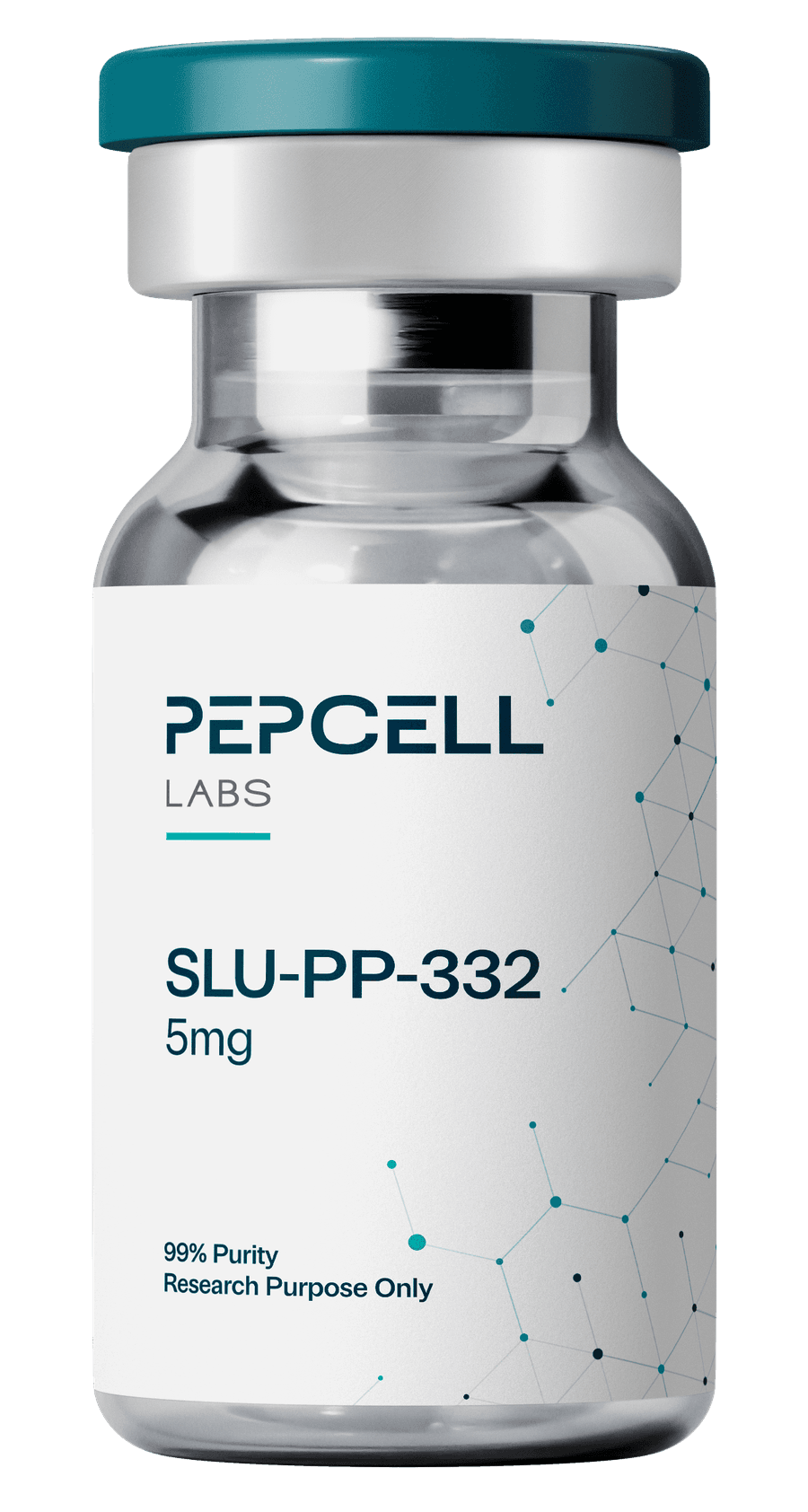
Size: 5mg
Metabolic Peptide
In stock · Ships same day · Free shipping over $150
Technical specifications
Molecular Profile
Small-molecule pan-ERR (estrogen-related receptor) agonist studied as an exercise mimetic.
Storage Requirements
Powder
-20°C · stable long-term
In solution
2-8°C · protect from light
SLU-PP-322 is a small molecule non-erythropoietic erythropoietin (EPO) receptor modulator developed at Saint Louis University that selectively activates the tissue-protective signaling arm of the EPO receptor (EPOR) heterodimer without engaging the classical homodimeric EPOR pathway responsible for erythropoiesis. At the molecular level, SLU-PP-322 is proposed to preferentially signal through the EPOR/beta common receptor (betacR) heterodimer complex, activating the JAK2-STAT5 and PI3K/Akt neuroprotective cascades that promote neuronal survival, anti-apoptotic gene expression, and anti-inflammatory cytokine profiles while avoiding the EPOR homodimer-mediated stimulation of red blood cell production that causes dangerous polycythemia and thromboembolic complications with traditional EPO use. Published peer-reviewed research demonstrates that EPO receptor tissue-protective signaling is distinct from its hematopoietic function, and non-erythropoietic EPOR modulators have been investigated in preclinical models of ischemic stroke, traumatic brain injury, peripheral neuropathy, and spinal cord injury with reports of reduced infarct volume, preserved neurological function, and decreased inflammatory infiltration. What distinguishes SLU-PP-322 from carbamylated EPO (CEPO) and other non-erythropoietic EPO derivatives is its small molecule format, which offers potential advantages in blood-brain barrier penetration, oral bioavailability, manufacturing scalability, and consistent pharmacokinetic properties compared to large recombinant protein-based approaches. Current scientific investigation focuses on optimizing EPOR/betacR selectivity, characterizing neuroprotective dose-response relationships, and exploring applications in neurodegenerative disease models where chronic neuroinflammation and neuronal loss are central pathological features.
SLU-PP-322 activates the tissue-protective EPOR/betacR heterodimer signaling pathway, engaging JAK2-STAT5 and PI3K/Akt cascades that upregulate anti-apoptotic proteins (Bcl-2, Bcl-xL), inhibit caspase-3 activation, and promote neuronal survival under conditions of ischemia, excitotoxicity, and oxidative stress. Published preclinical research on non-erythropoietic EPO receptor modulators demonstrates significant reductions in infarct volume and preserved neurological function scores in stroke and traumatic brain injury models.
Non-erythropoietic EPOR signaling through the betacR heterodimer suppresses NF-kB-mediated pro-inflammatory gene transcription, reduces microglial activation and astrocyte reactivity, and attenuates the production of inflammatory cytokines (TNF-alpha, IL-1beta, IL-6) that drive secondary neuronal damage following acute brain injury. Published research suggests this anti-inflammatory mechanism also modulates chronic neuroinflammation implicated in neurodegenerative conditions including Alzheimer's and Parkinson's disease pathology.
By promoting neuronal survival, reducing neuroinflammation, and supporting neurovascular unit integrity without altering red blood cell counts or blood viscosity, SLU-PP-322 maintains the neural substrate for cognitive function. Published research on tissue-protective EPOR signaling demonstrates preserved hippocampal neuronal density, maintained synaptic protein expression, and improved performance on memory and learning tasks in preclinical models of acute and chronic brain injury.
Published research protocols reference daily subcutaneous administration. Store at -20°C until reconstitution. Consult applicable literature for specific research applications.
Every batch is independently analyzed by a third-party laboratory for purity and identity before release. A batch-specific Certificate of Analysis (COA) is available for each lot.
Purity
99.6%
Lab
Janoshik Analytical Laboratory
Batch
SLUPP3-2025-001
Test Date
2025-03-15
Orders placed before our daily cutoff ship the same business day. Free shipping on orders over $150, with tracking emailed as soon as your order leaves our facility.
Shipment protection covers your order against loss or damage in transit — if a protected order is lost or arrives damaged, our support team will arrange a replacement or resolution.
For in-vitro research and laboratory use only. This product is not a drug, supplement, food, or cosmetic, and has not been evaluated by the FDA.
Use is restricted to qualified researchers and laboratories operating within all applicable institutional, legal, and ethical guidelines. By purchasing, you confirm you are acquiring this product solely for lawful research purposes.
SLU-PP-322 in lyophilized form should be stored at -20°C for long-term stability, where it remains viable for up to 24 months. As a small molecule rather than a peptide, SLU-PP-322 has inherent chemical stability advantages. Once reconstituted with an appropriate solvent, store at 2-8°C and use within 30 days. Protect from light and moisture during both storage and handling.
Every SLU-PP-322 batch is independently tested by Janoshik Analytical Laboratory using HPLC for purity (99%+) and mass spectrometry for molecular identity confirmation. As a novel EPO receptor modulator, identity verification is particularly important to confirm the specific structural features responsible for EPOR/betacR heterodimer selectivity over classical EPOR homodimer activation. Sterility and endotoxin testing are performed on each batch.
Yes, Certificates of Analysis documenting HPLC purity, mass spectrometry identity, and sterility testing are available for every SLU-PP-322 batch. You can find them on the product page under the Lab Results section, or contact support@pepcelllabs.com for specific batch documentation.
Once reconstituted, SLU-PP-322 should be stored at 2-8°C protected from light and used within 28-30 days. As a small molecule compound, it generally maintains stability better than larger peptides in aqueous solution, but freshly prepared solutions are recommended for research protocols requiring precise dose-response characterization.
SLU-PP-322 is sold strictly for in-vitro research, laboratory use, and educational purposes. This is an early-stage research compound developed at Saint Louis University with no human clinical trials conducted or planned at this time. The broader field of non-erythropoietic EPO receptor modulators is in preclinical development. This product is not intended for human consumption or self-administration. Always consult applicable regulations in your jurisdiction.