Loading...
Loading...
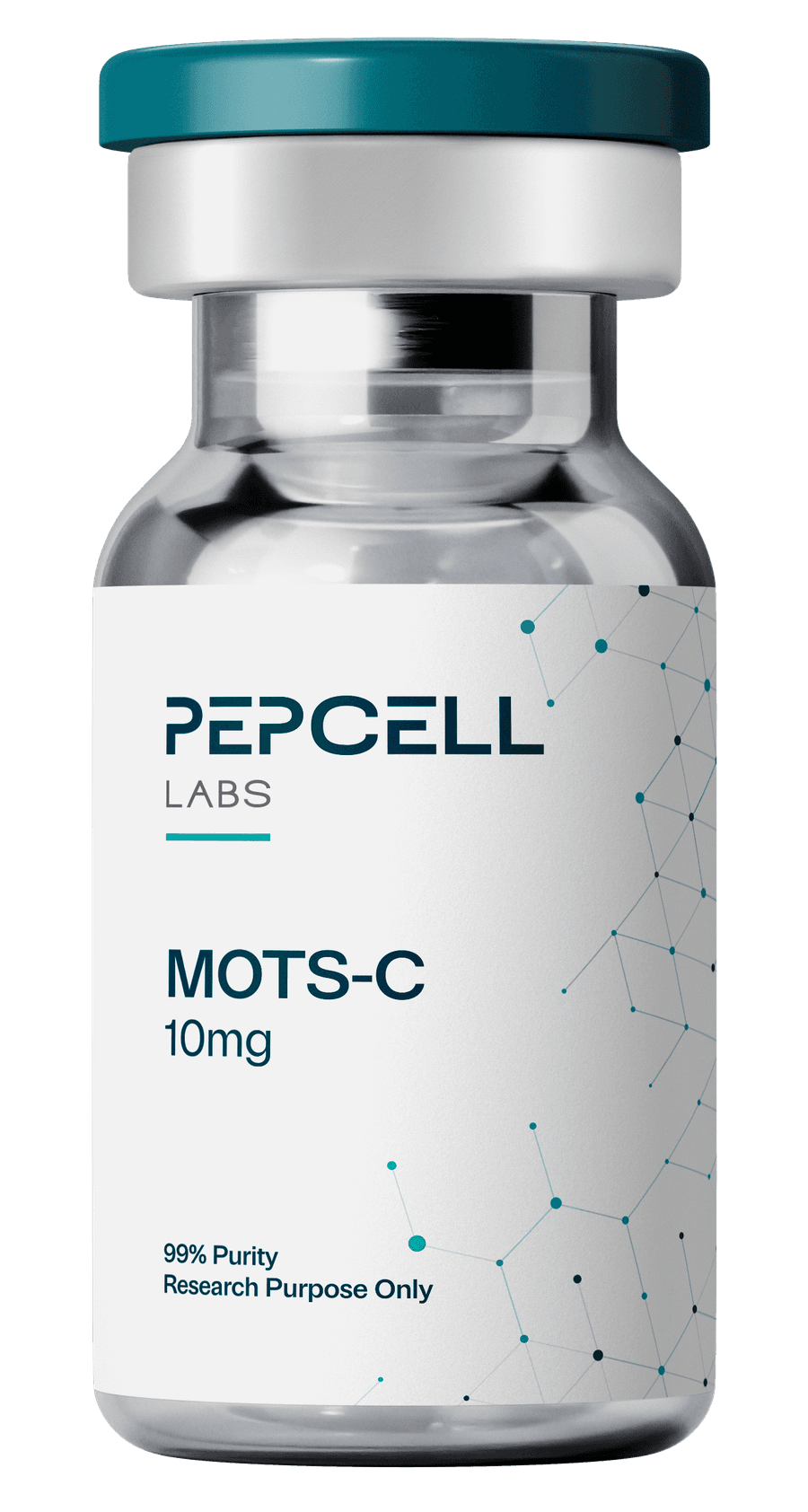
Size: 10mg
Metabolic Peptide
In stock · Ships same day · Free shipping over $150
Technical specifications
Molecular Profile
16-amino-acid mitochondrial-derived peptide encoded by the 12S rRNA region.
Storage Requirements
Lyophilized (powder)
-20°C · stable long-term
Reconstituted / in solution
2-8°C · use within 30 days
MOTS-c (mitochondrial open reading frame of the 12S rRNA type-c) is a 16-amino-acid peptide encoded within the mitochondrial genome in the 12S rRNA gene, making it one of a small class of mitochondrial-derived peptides (MDPs) that function as retrograde signaling molecules from mitochondria to the nucleus. Discovered in 2015 by Dr. Changhan David Lee at the University of Southern California, MOTS-c activates AMP-activated protein kinase (AMPK) through a mechanism involving modulation of the folate-methionine cycle and intracellular AICAR accumulation, triggering the same master metabolic regulatory cascade that endurance exercise engages through ATP depletion. Published peer-reviewed research demonstrates that MOTS-c enhances skeletal muscle glucose uptake through GLUT4 translocation, increases fatty acid beta-oxidation, promotes mitochondrial biogenesis via PGC-1alpha activation, and improves insulin sensitivity in diet-induced obesity and age-related metabolic dysfunction models. What distinguishes MOTS-c from other exercise mimetics such as AICAR or GW501516 is its endogenous mitochondrial origin and its dual function as both a circulating signaling peptide and a nuclear-translocating transcriptional regulator — under metabolic stress, MOTS-c translocates to the nucleus where it directly regulates adaptive nuclear gene expression through interaction with antioxidant response elements (ARE). Circulating MOTS-c levels decline significantly with age and are positively correlated with physical fitness, suggesting it may function as an endogenous exercise factor. Current scientific investigation encompasses exercise physiology, metabolic syndrome, type 2 diabetes, aging biology, and the emerging field of mitochondrial-nuclear crosstalk signaling.
MOTS-c activates AMPK through a unique mechanism involving inhibition of the folate-methionine cycle, which leads to intracellular accumulation of AICAR (ZMP), the endogenous AMPK activator. This indirect activation pathway distinguishes MOTS-c from direct pharmacological AMPK agonists and links mitochondrial signaling to cellular energy sensing through the one-carbon metabolism network, engaging multiple downstream metabolic regulatory pathways simultaneously.
Published research by Lee et al. demonstrates that MOTS-c administration in aged mice reverses age-dependent decline in physical capacity and improves exercise performance, recapitulating many metabolic adaptations normally requiring sustained physical training. Under metabolic stress, MOTS-c translocates from the cytoplasm to the nucleus where it interacts with antioxidant response elements (ARE) to directly regulate adaptive gene expression, functioning as a retrograde mitochondrial signal that coordinates cellular responses to energetic challenges.
MOTS-c enhances metabolic flexibility by simultaneously promoting GLUT4-mediated glucose uptake in skeletal muscle through AMPK-dependent translocation and increasing fatty acid beta-oxidation capacity through PGC-1alpha-driven mitochondrial biogenesis. Published preclinical research reports improved insulin sensitivity, reduced hepatic lipid accumulation, and restored metabolic parameters in diet-induced obesity and age-related metabolic dysfunction models following MOTS-c administration.
Published research protocols reference daily or 3-5 times weekly subcutaneous administration. Store refrigerated at 2-8°C. Consult applicable literature for specific research applications.
Every batch is independently analyzed by a third-party laboratory for purity and identity before release. A batch-specific Certificate of Analysis (COA) is available for each lot.
Purity
99%
Lab
Janoshik Analytical Laboratory
Batch
MOTSC-2025-001
Test Date
2025-04-08
Orders placed before our daily cutoff ship the same business day. Free shipping on orders over $150, with tracking emailed as soon as your order leaves our facility.
Shipment protection covers your order against loss or damage in transit — if a protected order is lost or arrives damaged, our support team will arrange a replacement or resolution.
For in-vitro research and laboratory use only. This product is not a drug, supplement, food, or cosmetic, and has not been evaluated by the FDA.
Use is restricted to qualified researchers and laboratories operating within all applicable institutional, legal, and ethical guidelines. By purchasing, you confirm you are acquiring this product solely for lawful research purposes.
Our MOTS-c is a synthetic 16-amino-acid peptide manufactured in FDA-registered, cGMP-compliant facilities in the USA. Each batch undergoes HPLC purity analysis (99%+), mass spectrometry for molecular identity confirmation of the complete 16-residue mitochondrial-derived peptide sequence, and sterility and endotoxin testing. The full-length sequence is essential for biological activity, as truncated variants show reduced AMPK activation in published studies.
MOTS-c in lyophilized form stored at -20°C remains stable for up to 24 months. As a 16-amino-acid peptide, MOTS-c has moderate stability but contains methionine residues susceptible to oxidation. Once reconstituted with bacteriostatic water, store at 2-8°C and use within 30 days. For extended research protocols, aliquoting reconstituted solutions into single-use volumes helps preserve peptide integrity.
Each order includes MOTS-c at the specified dosage in lyophilized form, a Certificate of Analysis (COA) from Janoshik Analytical Laboratory, and detailed storage and reconstitution instructions. The 5mg vial supports standard research protocols, while the 10mg vial accommodates higher-dose or extended designs referenced in the published exercise mimetic and metabolic research literature. Bacteriostatic water is sold separately.
Yes, we offer volume discounts for research institutions studying mitochondrial-derived peptides, exercise physiology, and metabolic regulation. MOTS-c is an emerging research compound with growing interest in the aging biology and metabolism fields. Contact support@pepcelllabs.com for wholesale pricing and custom quantities.
MOTS-c is sold strictly for in-vitro research, laboratory use, and educational purposes. While MOTS-c is an endogenous mitochondrial-derived peptide naturally present in human circulation, the exogenous synthetic form has not undergone FDA-regulated human clinical trials. Early-phase clinical studies are being planned at the University of Southern California. This product is not intended for human consumption or self-administration. Always consult applicable regulations in your jurisdiction.